Our Historic Building
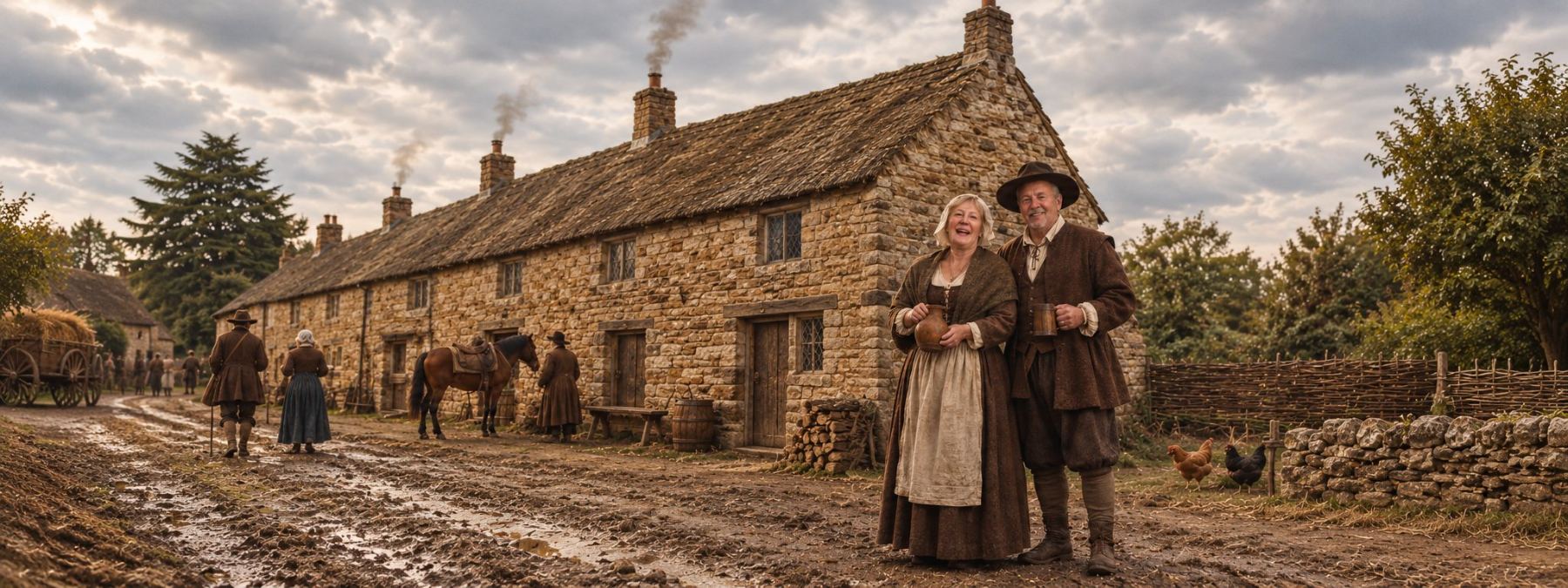
The Ruddy Duck has stood on St Pega’s Road for over 300 years. It began as a row of cottages, served the village for generations as The Black Bull, and owes its name to one of Britain’s best-known naturalists.
Built as cottages, around 1680–1700
The building at 12 St Pega’s Road dates from the late 17th century, roughly 1680 to 1700. Historic England records that it was built as a row of cottages rather than as a pub.
It is built of local stone rubble over two storeys, with a steeply pitched roof, gabled ends and leaded windows. Some of the original ceiling beams survive inside.
The building was Grade II listed on 24 February 1982.
Once The Black Bull
Before it was The Ruddy Duck, the pub was The Black Bull. It was one of three pubs that once served Peakirk, and it is the only one still open today.
The Black Bull was a well-established village drinking house long before its unusual change of name in the 1960s.
Sir Peter Scott and the Wildfowl Trust
In 1957 the naturalist Sir Peter Scott, son of the Antarctic explorer Captain Robert Falcon Scott, founded the Peakirk Wildfowl Trust just down the road. The sanctuary became a popular attraction for visitors interested in wildfowl and conservation.
In 1964 The Black Bull was renamed The Ruddy Duck, after the North American ruddy duck (Oxyura jamaicensis). Local accounts say Sir Peter Scott himself persuaded the landlord of the day to make the change, linking the pub to the sanctuary nearby.
The gardens close, the name stays
The sanctuary was renamed Peakirk Waterfowl Gardens in 1991 and closed in 2001.
The pub kept its name, and with it a link to what was once one of the village’s most important attractions.
The Ruddy Duck today
The Ruddy Duck carries on as a traditional village pub and restaurant. It changed hands in 2023, when Peakirk Parish Council also discussed seeking Asset of Community Value status for the pub.
Today it is run by landlords Nigel and Melanie, whose aim is to build a thriving pub at the heart of the village.